Apr 30, 2011

Photo of the Month April 2011


Hellenic artillery muzzle brake of M109A1B Self Propelled howitzer

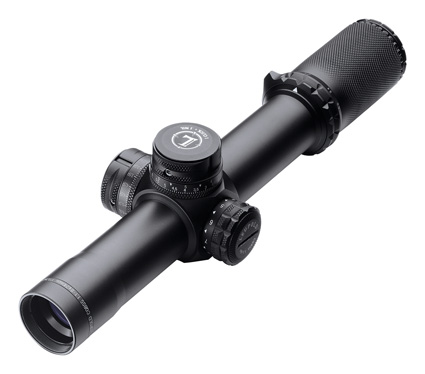
USMC awards contract to Leupold Tactical for Mark 8 CQBSS riflescopes.

Leupold’s® Tactical Optics Division has won a contract with the United States Marine Corps (USMC) to supply 728 Mark 8™ 1.1-8×24mm CQBSS™ riflescopes for use with M2 heavy machine guns and MK19 grenade machine guns. The sight will carry the M521 designation.
Ordered to meet the need of Afghanistan-based Marine units for a Heavy Day Optic, the Mark 8 CQBSS scopes will be employed to support combat operations. A key feature of the scope is Leupold’s new Marine-Tactical Milling Reticle (M-TMR™), which is designed to allow successful range estimation and target engagement with more flexibility than generally possible with other reticle styles. The M-TMR’s “staircased” configuration preserves the instinctive-fire capabilities on low magnification while allowing precise range estimation at any power setting.
“The Marine Corps’ innovative employment of this new technology will bring enhanced lethality to two combat-proven systems, the M2 and MK19 heavy machine guns,” said Kevin Trepa, vice president of Leupold’s Tactical Division. “We will continue working hard to deliver the new tools that our war-fighters need to succeed on the battlefield.”
The Mark 8 CQBSS has a state-of-the-art lens system providing operators with the capability of an 8-power precision rifle-scope in one rugged, field-proven unit. The 34mm main-tube features a fully checkered ocular bell for making quick magnification adjustments even while wearing gloves.
A front focal plane reticle, the M-TMR is accurate at all magnification settings. Eight illumination settings allow for optimum contrast with or without night vision. An off position between each intensity setting makes returning to the preferred setting nearly immediate.
In addition, the Mark 8 CQBSS has Auto-Locking Pinch and Turn turrets with 0.10 mil clicks that are extremely easy to adjust, yet eliminate accidental adjustment in the field. Leupold’s Index Matched Lens System® with DiamondCoat 2™ helps enhance optical performance by providing increased light transmission and scratch resistance that exceeds mil-specs.
Mark 8 CQBSS riflescopes have a matte black finish and are filled with an argon/krypton gas blend, making them second-generation waterproof, fog proof and shock proof. Flip-open lens covers and a 2.5″ sun shade are standard issue.
Leupold Tactical Optics undergo arduous environmental and impact testing to ensure they meet the highest quality standards for durability and dependability. Leupold Tactical Optics are backed by the company’s long history of customer-satisfaction warranties. For warranty information on specific products, call 1-800-LEUPOLD (Option 4) or e-mail tacticaloptics@leupold.com. 

For additional product information, go to Leupold.com.

Supported by a team of dedicated engineers, the Leupold Tactical Optics staff works with American warfighters, law enforcement personnel, and competitive shooters to design and build products that meet their needs. Currently, more long-range Leupold Tactical Optics are in service with the U.S. military than any other brand.
Source: Leupold

Record numbers of Norwegians are queuing up to serve as professional soldiers in Afghanistan.

Attacks on Norwegian soldiers have been increasing since Norway started sending troops to Afghanistan in 2001, with battles and psychological pressures becoming more intense. 10 soldiers have died to date in total, and a former top military man has claimed Norway is losing the fight.
However, the all-professional, at times controversial Telemarksbataljon, has had 550 applicants for just 50 places so far this year.
“It’s our highest figure ever. We see there are groups of Norwegians who want to become professional soldiers for a while. Those wishing to enlist in our battalion are tells us they have the motivation to take on increasingly dangerous assignments,” Lieutenant Colonel Lars Lervik tells Vårt Land.
Ståle Ulriksen, researcher at the Norwegian Institute of International Affairs (NUPI), believes the numbers do not reflect just the hunt for excitement and adventure, however.
“These young people also want to do something they see as meaningful with their lives.”
The Lieutenant Colonel says, “Our personnel favour international operations, and now wish to protect Afghan civilians.”
The battalion currently has 450 personnel, including 250 grenadiers. Soldiers can serve for a maximum of six years.

Source: Michael Sandelson for The Foreigner.

SureFire HellFighter 4

Battlefield experience using the successful SureFire HellFighter (HF1) has led to the next generation heavy weapon illumina- tor—HellFighter 4 (HF4). The most significant improvement is an integral rechargeable battery that can run the HF4 at full output for 30 minutes. The integral battery not only serves as a backup to the other two power options—vehicle outlets and BA-5590 disposable batteries—but also makes the HF4 more compact and convenient to use as a handheld spotlight/searchlight.
The rail mount performs double duty as a carry handle. The rail mount itself has been modified to include both the original heavy- duty T-rail clamp and an intermediary adapter mount that permits attaching the HF4 to a Picatinny rail.
Another change is selectable output. When attached to the UH-01E power cable—which includes a new grip switch for the M2HB ma- chine gun—the operator can choose high output (3,000 lumens), low output (1,000 lumens), or strobe mode that flashes about nine times per second (9 Hz). The UH-01E power cable is backward- compatible with the original HellFighter, but does not provide high/ low output or strobe capabilities to that device. All HellFighter power cables now feature a high-strength polymer sheathing that makes them thinner, lighter, more flexible, and more durable.
Finally, the HF4 features a dual swing-open filter/cover system, al- lowing the operator to quickly choose unfiltered white light, filtered infrared illumination, or an opaque protective cover. The HF4’s reflector has also been modified to provide better beam reach and wider peripheral light for situational awareness.

  • High-output, low-output, and stobe capability from HID lamp
  • Modified reflector provides better reach and wider peripheral beam
  • Durable lightweight power cables
  • Picatinny rail adapter clamp
  • Dual swing-open filter/cover system allows quick configuration for unfiltered white light, filtered IR output, or protective cover
  • Carry handle integrated into rail mount reduces profile
  • Integral rechargeable battery provides 30 minutes of runtime at high output

Apr 28, 2011

Munitions knowledge at your fingertips

Photo credit U.S. Army
The Ammunition Multimedia Encyclopedia allows military and civilian personnel to have access to munitions information, even in the most remote locations.
MCALESTER, Okla., April 26, 2011 -- Imagine a Soldier in the hills of Afghanistan or civilian supporting training in a remote area in the back woods somewhere needs critical information on a new piece of munitions. Where can they go to access this information? They can't call back to base. They can't carry a rucksack full reference books with them.

The Defense Ammunition Center, or DAC, partnering with Serco Inc. and Oklahoma State University, has responded to this need. The Ammunition Multimedia Encyclopedia, or AME, was created to provide Soldiers and ammunition civilians in the field a reach-back information center that provides key data related to new munitions items and inspection points.
AME uses virtual reality technology to create a realistic, hands-on training environment and can be used on anything from a desktop computer to an iPhone.
"AME is an electronic performance support tool," explained Upton Shimp, associate director of Operations and Training with the Defense Ammunition Center. "The goal of AME is to provide a surveillance tool to support personnel inspecting munitions. It provides an encyclopedia of currently used munitions which can be used for inspection and refresher training."
AME has been in use for three years. The first year was the pilot phase, folowed by a second year of compiling information for the web version. The final year involved taking the AME to the application environment.

The AME was developed by a small group of Oklahoma State University, or OSU, students, led by Ramesh Sharda, director, Institute for Research in Information Systems, OSU Spears School of Business.
"Designing the AME has been a tremendous learning experience for our students," said Sharda. "Students are gaining knowledge about immersive technology, image editing, iPhone, iPad development, and security regulations for these devices."
"Working with the students to develop new technology that can benefit warfighters has been rewarding for everyone on the project," Sharda said. "In addition, it provides the students with tremendous learning experiences, making them attractive to their prospective employers."
Currently, there are 180 munitions items in the AME available for viewing through the Ammunition Community of Practice https://acc.dau.mil/ammo.
Additionally, 100 munitions items will be added in 2011, totaling 280 different munitions items by the end of this fiscal year.

"Munitions items can be searched by the Department of Defense Identification Code or by name," said Shimp, making AME a very user-friendly tool, that saves time and provides 24-hour munitions support.
Currently, the AME application is targeted toward Quality Assurance Specialist (Ammunition Surveillance) and Ammo Logistics Assistance Representatives in the field who are handling, packaging and inspecting ammunition.
"The plan for the applications environment is to make the AME conducive to the customer," said Sharda. "All information will be uploaded into the memory of mobile application device and used as a reference in the field."
Development of the AME is a win-win situation. It allows military and civilian personnel to have access to munitions information, even in the most remote locations, and provides hands-on training and experience for OSU business information technology students. 
 

KA-BAR Mark I

KA-BAR Knives is proud to introduce the Mark I, a legendary World War II knife redesigned for the 21st Century.

The Mark I features a 5 1/8” blade and measures 9 3/16” overall. Offered with a leather or Kraton handle, the Mark I is available with either a straight or serrated edge in 1095 Cro-Van. The Kraton handle Mark I comes with a hard plastic sheath, while the leather handled version features a leather sheath. The leather handle Mark I is available exclusively through Smoky Mountain Knife Works.

Made in Olean, NY, the Mark I will be available May 1, 2011.  

Apr 27, 2011

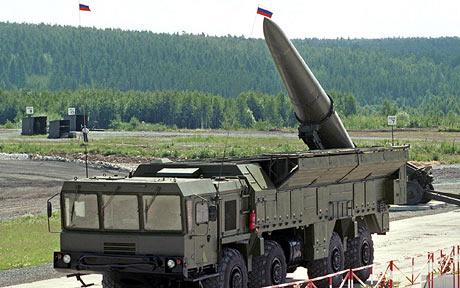
Russia to test 90 new types of weapon in 2011

MOSCOW, April 25 (Xinhua) -- Nearly 90 types of new weaponry will be tested in 2011, Russian Defense Ministry said on Monday.
The weapons include Iskander-M, S-300, S-400, Tor-M2 and Buk missile systems, Panzir-S anti-aircraft missile-and-cannon complex, Smerch missile volley-fire system, as well as intercontinental ballistic missiles, Interfax news agency reported.
According to the ministry, the tests will be held in the Kapustin Yar testing range in Astrakhan region.
Some 350 missile launches have been conducted from Kapustin Yar last year in the interests of Russian, Algerian, Azerbaijani, Belarussian, Vietnamese, Venezuelan and Myanmar armed forces, the ministry said.

Vests more bullet-proof with wool

Adding wool to kevlar makes a lighter, stronger and cheaper bullet-proof vest, new research shows.
 
WOOL HAS MANY PROPERTIES ideal for fashion; this natural fibre is warm, elastic fire- and static-resistant, and easy to clean. But new research has uncovered a new use: making body armor even more bullet resistant.

Scientists at the Royal Melbourne Institute of Technology school of fashion and textiles discovered that a blend of wool and kevlar, the synthetic fibre widely used in body armor, was lighter and cheaper and worked better in some conditions than kevlar alone.
The RMIT textile technologist Dr Rajiv Padhye says the standard bullet-proof vest was generally made of kevlar, a dense, strong and expensive fibre. For military use, a heavy ceramic plate provides greater protection over vital areas.
A kevlar vests typically comprises some 36 layers of kevlar fabric. But it loses about 20 per cent of its effectiveness when wet, requiring an expensive waterproofing process.
"What we did was kept the kevlar but added a wool yarn into this," he says.

Cheaper, lighter

The increased friction of the wool in a tight weave means that a vest with 28-30 layers of fabric, provides the same level of bullet resistance as 36 layers of kevlar.
"And because wool fibres expand naturally in water by up to 16 per cent, the wool-Kevlar blend actually becomes more effective in wet conditions," he says. "The result is a cheaper bullet-resistant vest that works even better when it's wet."
That's a significant matter, considering kevlar costs about $70 a kilogram, compared with about $12 a kilogram for wool.
Rajiv says RMIT had worked with Australian Defence Apparel (ADA) as an industry partner and had taken out a patent. ADA currently provides body armour and uniforms to the Australian Defence Force.
"The next step is to see see if we can move ahead with ADA or any company and see if we are able to commercialise this," he says.
 

Apr 23, 2011

Apache to field ground fire-detection system

NASHVILLE, Tenn. (Army News Service, April 22, 20110 -- Apache attack helicopters will soon field a new, high-tech Ground Fire Acquisition System which uses cameras and infrared sensors to instantly identify the source location of ground fire, service officials said.
"GFAS detects ground fire. It allows us to take information about incoming fire, get our sensors on it and identify and prosecute ground targets," said Maj. Justin Highley, Assistant product manager for the Longbow Apache.

The IR sensors built into the GFAS system detect muzzle flashes from the ground, allowing Apache pilots to get their sensors on potential targets and immediately know the location, and distance of ground fire, Highley explained.
Next spring, 1-101 Aviation out of Fort Campbell will become the first unit equipped with GFAS, he said.
The cameras on the aircraft detect the muzzle flash from ground fire - and move the information through an Aircraft Gateway Processor into the cockpit so pilots will see an icon on their display screen, said Lt. Col. Jeff Johnson, product manager, Longbow Apache.
"The beauty of this system is that we are not changing the aircraft software. We are not adding displays. It's integrated through an Aircraft Gateway Processor," he said.
Upon receiving the information about the ground fire on their display screens, the aircraft crew can move their Modernized Target Acquisition Designation Sight/Pilot Night Vision Sensors, or MTADS/PNVS, onto the target at the touch of a button, Johnson said.

"The crew sees the point of origin where the muzzle flash was detected,"
he said. "It is not just about the aircraft, but about getting information to guys on the ground who are in the fight. Apache has led the way for other platforms with net-centric operations and situational awareness. It is about getting the information to our guys on the ground so they can develop the situation and take appropriate action."
The GFAS effort - called an Early User Evaluation - has undergone a range of key tests at places such as Mesa Ariz., and Yuma Proving Ground, Ariz., Johnson explained.
Pending successful outcome of the User Evaluation, the Apache PM will look at expanding GFAS' capabilities, including integrating the technology with Blue Force Tracker display screens, Johnson said.
"Crews often return from missions in Afghanistan with small-arms damage to the aircraft. GFAS is an offensive targeting system. It is not a piece of aircraft survivability equipment. It helps us fulfill our mission of closing with and destroying the enemy. How many of those forces who've been trying to shoot down our helicopters with small arms would have been eliminated by now if we had been able to pinpoint their location?" Johnson said.

"A recent historical example of why we need GFAS is the battle for Camp Keating in October 2009. We lost 8 Americans and wounded 24 in one day because we could not locate an attacking enemy during the daytime.
"Medevac could not extract our wounded until 2100, when it was dark and those small-arms weapons had finally been located and destroyed -- after 8 or 9 hours of fighting," Johnson said. "To me, that's unacceptable. Our Soldiers deserve better."

Third Army showcases its readiness during Lucky Warrior 2011

CAMP ARIFJAN, Kuwait -Third Army conducted a readiness exercise at Camp Arifjan Apr. 16-19. The exercise, titled Lucky Warrior, helped ensure Third Army maintains a full spectrum of responsive capabilities through an effective forward-deployed force structure.
In a region filled with uncertainty, Third Army maintains its commitment to defend its regional and partner nations in the region through an effective and robust theater-wide engagement plan.
"The Third Army team exhibited the level of readiness expected from such a professional organization," said Maj. Gen. Al Aycock, special assistant to the commanding general, Third Army and a native of Goldsboro, N.C. "The readiness displayed during the Lucky Warrior exercise is very import to the lives of U.S. Soldiers. Our team demonstrated that we take pride in our mission and understand the importance of the exercise."
The Lucky Warrior exercise has been conducted periodically throughout the years to maintain readiness for contingency operations throughout Third Army's area of responsibility. The focus of the four-day exercise was to provide a venue to gather lessons learned in order to refine and improve Third Army battle staff preparedness.
Lucky Warrior is geared toward exercising Third Army's command and control architecture and to demonstrate its capacity to operate as the Joint Security Coordination Center for U.S. Central Command. This was the first time many of Third Army's subordinate commands in distributed locations integrated their command posts into this readiness exercise. The commands included the 1st Theater Sustainment Command, Area Support Group-Kuwait and Area Support Group-Qatar.
"Third Army possesses the agility to balance real-world and exercise events simultaneously," said Col. George Cone, Third Army director of training and exercise and native of Chappaqua, N.Y.

So what is the status of Third Army's readiness?

"Third Army stands Ready Tonight to conduct operations anytime, anywhere to deter and defeat adversaries," Cone said. "We also possess the unique ability to sustain two theaters of operation and continue to Shape and build partner capacity in the U.S. CENTCOM area of responsibility."
 
Related Posts with Thumbnails