Jan 13, 2011

782 Gear Unveils New Designs

782 Gear is located in Fall River, MA and operating from remote offices in Spokane, Washington and Northern Virginia, 782 Gear was born from the inspiration of those who put their lives on the line each day in the defense of our freedom in the GWOT. Professional users such as military, law enforcement, and first responders demand the utmost in comfort and performance from their clothing and equipment... it may mean the difference between life and death. With over fifty years of industry experience and world class in-house design capability, our vision of what our customers need and want is crystal clear.
Duro Textiles, LLC has a tradition going back to 1947 and is one of the country's largest dyers, printers, finishers and distributors of textile products. Duro has maintained a leadership position within the textile industry through a commitment to new technologies, customer service and product innovation. The company is headquartered in Fall River, MA and employs 500 people. Duro Textiles is owned by Patriarch Partners LLC. The Patriarch platform is a vertically integrated distressed private equity firm with robust in-house operational turnaround expertise. Patriarch has managing funds with over $7 billion of equity and secured loan assets with equity investments in more than 70 companies, and controlling interests in approximately two-thirds of these. 

Velocity Softshell ¼ Zip Pullover

Product Description

We can't make you faster...but you might feel that way in this high-function, ultra-light piece. Essential lightweight ops gear, packable, with an amazing warmth/weight ratio. Superb protection from wind and water.  Athletic cut, 2 and 4-way stretch materials provide mobility and comfort.  2-way quarter zip design allows added ventilation even while still keeping the collar closed.  Full-zip jacket version also available.
  • Schoeller® NanoSphere® treated 2-way stretch shell
  • Tweave DURASTRETCH® 4-way stretch panels
  • Moisture-wicking lining
  • Zippered pocket for wallet, MP3, smokes or dip
  • Weight (medium) - 9.6 oz (272g)
  • Available in Multicam®

Rogue Parka

Product Description

An amazing 3-season parka merging the best of hard-shell and stretch soft-shell technology without sacrificing mobility.  A core-insulating, fleece lining enhances comfort.  Zip access to chest and belt mounted items enhance functionality.  A best-in-class hood (optional, #7825002) compliments this amazing piece of foul-weather gear. 
  • Ultra-durable  3-Layer Gore-Tex® military hardshell
  • Tweave 4-way stretch softshell with DWR
  • Polartec® Power Stretch® fleece
  • L&R 2-way side zip access to belt hung essentials
  • Zip chest pockets, pencil/Maglite sleeve pocket
  • Zip core vents allow access to shirt pockets
  • ID panel stows in tail pocket (optional, #7825003) 
  • Available in black, Multicam® (m/c available Jan/Feb '11, $80 up-charge)
 

REVISION INTRODUCES SAWFLY® SMALL-SIZE EYEWEAR SYSTEM

01.12.2011– Essex Junction, VT, USA – Revision, leading developer of protective eye-wear for military worldwide, introduces the Sawfly Military Eyewear System in size Small. In addition to the established Regular and Large sizes, the Sawfly Small provides best-in-class protection and performance for users with a smaller face geometry. The Sawfly Small is 10mm narrower, temple to temple, than the Regular Sawfly size. The Small also features a tighter base curve lens that follows the contours of smaller proportions, providing greater lateral protection and improved retention for its users.

“As a leader in military eye-wear, Revision strives to meet the needs of its customers. In working directly with our end users, Revision determined the need to add a Small size to the Sawfly line,” explains John Fowler, VP Product for Revision. “Personal protective eye-wear needs to properly fit a wide range of head sizes in order to provide a comfortable, ergonomically correct solution.”

Like its Regular and Large counterparts, the Sawfly Small features the newly redesigned Sawfly Spectacle frame, Comms Compatible arms, new Comfort Nose-piece, an extended lens and new retention system. The result is a superior eye protection product that provides optimal comfort, fit and gear compatibility as well as excellent ballistic and optical performance.

Like all Sawfly eye-wear products, the Sawfly Small provides superior ballistic protection, exceeding ANSI Z87.1-2010 and military ballistic impact requirements (MIL-PRF-31013, clause 3.5.1.1 and MIL-DTL-43511D, clause 3.5.10); flawless optics for distortion-free vision; and rugged durability to protect and perform through all the rigors of combat.

The Sawfly Eyewear System in size Small makes its debut at SHOT Show 2011, taking place January 18-21 at the Sands Expo & Convention Center in Las Vegas, NV. The two-lens Essential Kit has an MSRP of $89.99 and the three-lens Deluxe Kit retails for $119.99 MSRP
 
A female soldier wears the Sawfly Eyewear System in size Small. It is 10mm narrower, temple to temple, than the Regular size Sawfly and features a tighter base curve lens that follows the contours of smaller face proportions

Aimpoint Red Dot Sites Launches New Website

New Website Offers More Functionality And Custom Features For U.S. Market

Aimpoint, the originator and worldwide leader in electronic red dot sighting technology, has announced the launch of a brand new website.
The new Aimpoint.com offers users more overall features, more functionality and more information than ever before including a custom website for the U.S. market.
This IP address function will allow website visitors to go directly to the U.S. home page where they will have access to information specifically for the Aimpoint U.S. market.
The new website provides users with the necessary tools to make their selection when purchasing an Aimpoint red dot sight. Product information broken out by market segment (hunting, sport shooting, law enforcement and military) and the product comparison guide will allow Aimpoint buyers to narrow their options by application and features.
While making their purchasing decision, users will also be able to find their dealer of choice through the dealer locator and where to buy functions.
In addition to the many educational components of the website, visitors will also have access to Aimpoint downloads such as movies, screen savers and wallpaper. Aimpoint.com invites users to join their affinity and loyalty program, Aimpoint e-Club, where they will receive special benefits, newsletters and updates. Aimpoint owners may also register their sight, which provides them with confirmation of ownership and new product updates.
For more information on Aimpoint and Aimpoint products, visit the company’s new website at: www.aimpoint.com

Global Observer, AeroVironment’s Extreme Endurance Unmanned Aircraft System, Achieves Historic First Hydrogen-Powered Flight

Key Milestone Achieved for System Designed to Provide Persistent Communications and Surveillance at 20% of the Cost of Existing Solutions.


MONROVIA, Calif., Jan. 11, 2011 -- AeroVironment, Inc. (AV) (NASDAQ:AVAV) today announced that the Global Observer™ unmanned aircraft system has successfully completed its historic first flight powered by the aircraft’s hydrogen-fueled propulsion system at Edwards Air Force Base (EAFB) in California. This milestone marks the beginning of high altitude, long endurance flight testing for the demonstration and operational utility phase of the Joint Capability Technology Demonstration (JCTD) program.

“Global Observer has moved quickly from development and testing toward demonstrating mission-ready, affordable persistence,” said Tim Conver, AV chairman and chief executive officer. “Similar to a satellite, Global Observer is the first system designed to provide a 24/7/365 unblinking eye and continuous communications link over any location on the earth’s surface for as long as needed. The joint AV and U.S. government team developed Global Observer to meet today’s urgent requirements for persistence and to enable the development of much more cost-effective solutions for the future. The speed with which we have achieved this milestone reflects the benefits of an effective government-industry partnership.”
Because of its extreme endurance and range, Global Observer can be based out-of-theater, which will further reduce operating costs and local air traffic congestion while significantly reducing risk to operational personnel. AV plans to make Global Observer systems available for procurement and for operation as a turnkey service to provide communications and remote imaging in a manner similar to satellite services, but at a much lower cost.
The hydrogen-powered flight lasted for four hours and reached an altitude of 5,000 feet above sea level over the United States Air Force Flight Test Center at EAFB. This first flight follows the successful battery-powered flight test phase of the demonstration program that took place during the months of August and September.

The flight test team will now systematically expand the altitude and duration of test flights to validate the aircraft’s high-altitude, long endurance performance. These flights will include the Air Force's Joint Aerial Layer Network (JALN) Tactical Communications Suite (TCS) payload. The JALN TCS provides persistent, IP-based aerial communications infrastructure that extends communications from a Global Observer aircraft positioned at 65,000 feet above sea level over a wide area. The joint operational utility of the Global Observer system will also be assessed during this flight test series for future U.S. Government, civil, and military uses.

 
About Global Observer

With 20 years of experience developing stratospheric, long-endurance unmanned aircraft systems (UAS), AV is developing Global Observer to operate as a “stratospheric geosynchronous satellite system” with regional coverage and minimal signal delay. Two Global Observer aircraft, each flying for up to a week at a time, will alternate coverage over any area on the earth, providing a seamless, persistent platform for high value missions such as communications relay, remote sensing, long-term surveillance and border patrol. Offering greater flexibility than a satellite and significantly longer duration than conventional manned and unmanned aircraft, Global Observer is designed to provide critical new capabilities in a reliable and more affordable manner, all while consuming no fossil fuels and emitting no carbon emissions.
In addition to flying above weather and above other conventional airplanes, operation at 55,000 to 65,000 altitude enables sensor payloads on the aircraft to view a significantly larger area on the surface of the earth than conventional, lower flying aircraft. Equipped with payloads that are readily available today, a two Global Observer system would provide persistent satellite-like coverage over any location on the globe at a fraction of the cost of satellites.
AV received the contract for developing and demonstrating Global Observer as a JCTD program in September 2007. Six U.S. government agencies have provided more than $140 million in funding for the program.

Jan 12, 2011

FERFRANS HVLAR (High Volume Light Automatic Rifle) IAR-Type AR Carbine Performs 150-Round Full-Auto Mag Dump with ARMATAC SAW-MAG 150-Round Double-Drum Magazine

Falcon Security ( http://www.falconsecurity.us ) personnel perform full-auto mag dump and weapon temperature/heat test with FERFRANS HVLAR 5.56x45mm NATO (5.56mm NATO)/.223 Rem. select-fire/full-auto AR carbine (AR-15 carbine), utilizing Armatac SAW-MAG 150-shot double-drum mag (magazine).


You can read more about the FERFRANS HVLAR piston/op-rod AR carbine at the following link:

http://www.defensereview.com/ferfrans...


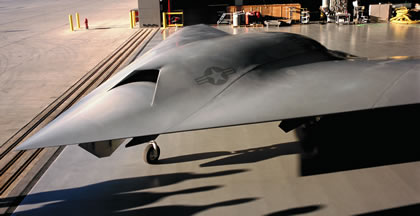
Stealthy UAV Hitches A Ride on 747

Boeing’s Phantom Ray stealth UAV being shipped to Edwards Air Force Base in California aboard the old 747-based Space Shuttle Transporter.Now that NASA has little need for the shuttle-carrying jet, Boeing persuaded the space agency to modify the plane to carry its stealth drone from St. Louis, Mo., to California. The Chicago-based company expects the drone to take its first flight early this year.
The Phantom Ray is part of Boeing’s internally-funded effort to develop stealthy, combat UAVs. It piggybacks on the company’s old X-45 offering for the Navy’s competition to develop an unmanned combat air system. That plane lost the Navy contest to Northrop’s X-47.


Jan 11, 2011

Electronic Data Manager (EDM)

Mission
Enables aircrew members to plan missions quickly and to react to mission changes while in flight.


The Electronic Data Manager (EDM) is a light, portable touch-screen computer in the form of a kneeboard that provides the aviator with global positioning system (GPS) moving map capabilities, sunlight readability, and the ability to use Windows-based software. 


    The EDM includes:
  • 
Moving map display (GPS aircraft position and waypoints)
  • 
Tactical graphics
  • 
Two-way Blue Force Tracking-Aviation situational awareness
  • 
Beyond-line-of-sight text messaging
  • 
Displays of checklists, manuals, and approach plates in PDF format 

  • Capability to import mission planning data from Aviation Mission Planning Systems software 

  • Weight and balance calculations
  • 
Aircraft performance planning calculations 

  • Electronic notes
     
    
EDM Spiral 3.5 improvements include:
  • 1.6 GHZ System Processor

  • 2 GB RAM

  • 6.4” Sealed Trans-reflective Glass Touch Screen 480x640
  • 
Sunlight Readable and NVG Compatible Display

  • 60 GB Solid State Hard Drive

  • External Power, Ethernet, and USB 2.0 interfaces-enhanced speed and performance

  • Ability to host future dynamic terrain and obstacle avoidance

Jan 10, 2011

Corps: New body armor more comfortable

Cpl. Casey Jones / The Associated Press Lance Cpl. Kevin Shanahan, a rifleman with 1st Battalion, 6th Marine Regiment, 2nd Marine Division, prepares to take off the Improved Scalable Plate Carrier.
Improved tactical vest, plate carrier coming in 2011
By Dan Lamothe - Staff writer
Posted : Monday Jan 10, 2011

As early as spring, Marines will be dawning the next generation of improved body armor designed to be more comfortable and adjustable than current models.
The designs are similar to those of existing vests, but have been refined, said 2nd Lt. Jamie Larson, a spokeswoman for Marine Corps Systems Command, out of Quantico, Va.
The development of the IMTV dates back to at least 2008, when troops in Iraq and Afghanistan complained of the discomfort of the MTV, which can add up to 30 pounds when filled with armor plates.

Shadow Dextrous Hand

The Shadow Dextrous Hand offers a wireless solution to bomb disposal…

British engineers have designed a highly dexterous remote-controlled robotic hand that they hope could lead to a breakthrough in the field of bomb disposal.
The robotic hand, dubbed the Shadow Dextrous Hand, contains 20 motors – each corresponding to a joint of the human hand – and is able to replicate 24 precise movements often performed by the hand. 
The new C6M2 unit can be controlled by a glove that has an array of sensors connected to a computer. The sensors track wearers movements and then relays the information wirelessly the unit which replicates them in real-time.
Developers the Shadow Robot Company, hopes that within the next two years it will have progressed the technology to replicate the sophisticate movements required to dispose bombs.


Jake Goldsmith, robotics engineer at Shadow told, that they were ‘eighteen months to two years away from being able to have the technology.’
One major hurdle, explained Goldsmith, is getting the pressure right as many actions performed by the fingers needs a good amount of force, but not too much. 
The company is already in talks with the Military; however they must first prove that the device is precise enough to be deployed with the bomb disposal unit.
The Shadow Dextrous Hand was on display at the TechnologyWorld forum at London’s Excel Centre early in December, 2010. 

Jan 9, 2011

Nowhere to Hide — A ‘Smart’ Individual Weapon System for the Soldier

The following article was written by Lt. Col. Christopher Lehner for the Army News Service.

 The U.S. Army achieved a new milestone in weapon technology on August 11, 2009, when one of its Soldiers successfully shoulder fired a ‘smart’ High Explosive Airburst (HEAB) round from the XM25 weapon system at the Aberdeen Test Center in Maryland.
At first glance, the XM25 looks like something out of a Sci-Fi movie. It features an array of sights, sensors and lasers housed in a Target Acquisition Fire Control unit (TAFC) on top, an oversized magazine behind the trigger mechanism, and a short, ominous barrel wrapped by a recoil dampening sleeve. Unlike a Hollywood prop, however, this weapon is very real and designed to accurately deliver an explosive round that neutralizes targets at distances of up to 700 meters – well past the range of the rifles and carbines that most Soldiers carry today.
“What makes this weapon system truly revolutionary is the ability to target the enemy, pass on this information to the sensors and microchips of its 25mm HEAB round, and have that round detonate over the target,” explained MAJ Shawn Murray, a Soldier Weapons Assistant Product Manager in Program Executive Office (PEO) Soldier, the organization responsible for developing the XM25. “When the HEAB round explodes the target is peppered with fragmentation.  Our studies indicate that the XM25 with HEAB is 300 percent more effective at incapacitating the enemy than current weapons at the squad level.”
Because of the XM25’s unique TAFC and HEAB round, Soldiers will be able to engage enemy forces located in the open and “in defilade” –behind cover, such as walls, rocks, trenches, or inside buildings. The semi-automatic weapon’s magazine holds four 25mm rounds and can be employed at night or during inclement weather thanks to the XM25’s built-in thermal sight.   The Army plans on purchasing over 12,500 XM25 systems starting in 2012, which will be enough to put one in each Infantry squad and Special Forces team.


After only five minutes of instruction at the Aberdeen Test Center, SGT Logan E. Diveley from the 180th Infantry Regiment was able to put his first HEAB round through a building’s window and take out an enemy mannequin at 200 meters. When asked what he thought of the weapon, SGT Diveley responded, “I’ve been in over nine contacts with the enemy during my two tours in Iraq. Their ambushes were usually initiated with an IED and followed up with small arms fire from behind walls and buildings, places where it was hard for us to get at them. The XM25 would have taken care of things and made our jobs much easier.”
Once downrange and in the building where the defeated enemy mannequin lay, MAJ Murray noted the limited collateral damage associated with the XM25. “Because of its pinpoint accuracy and relatively small warheads, the XM25 can neutralize an enemy without the need to destroy a whole building. For our counter insurgency operations to be successful, it is important to keep collateral damage to a minimum and to protect the civilian population. I think the XM25 will prove itself many times over in Afghanistan,” Murray said.
The XM25 is being developed by PEO Soldier, the Army acquisition organization responsible for nearly every piece of equipment worn or carried by Soldiers. This includes items ranging from socks, to weapons, to advanced sensor and communication devices. PEO Soldier bases much of its work on the feedback from individual Soldiers, developing or procuring solutions to meet those needs. The development of the XM25 is one such a program, designed to provide Soldiers a solution for dealing with enemies in the open and behind cover  that is more precise, quicker to employ, and more cost effective than mortar, artillery, or air-strikes.


A Battlefield Scenario for the XM25

An American patrol nears a walled, Afghan village when an enemy combatant looks over the wall and fires his AK-47 rifle at the oncoming U.S. Soldiers. The Americans return fire with their rifles and maneuver, but find it difficult to neutralize the enemy rifleman who repeatedly exposes himself for only a second, shoots, then ducks behind the thick wall. At this time, the patrol leader calls for the XM25 gunner to take action.

Immediately, the XM25 gunner aims the laser range finder at the top of the wall where the enemy last ducked down. The gunner presses the laser range finder button on the front of the XM25’s trigger guard and records a distance to the wall of 451 meters. The distance is displayed on the TAFC’s optical lens along with an adjusted aim point, or “cross hair,” to help the soldier better aim the XM25. This adjusted aim point takes into account air pressure, temperature, and the ballistics of the 25mm round for the given range of 451 meters. The soldier then uses the increment button on the trigger guard and adds one more meter to the firing solution since the enemy combatant is approximately a meter behind the wall.

Upon pulling the trigger, the TAFC programs the HEAB round in the chamber of the weapon, telling the round to explode at 452 meters from launch point. The HEAB round departs the rifled barrel, arms at 30 meters, clears the top of the wall at 451 meters and explodes its two warheads at 452 meters, right above the enemy. The entire firing sequence takes the gunner less than five seconds to aim and fire and another 2.5 seconds for the round to fly and explode over the target, thereby clearing the way for the patrol to resume its mission.


XM25 Update

There have been numerous stories in the media lately covering the XM25’s forward operational assessment in Afghanistan. We wanted to provide an update on PEO Soldier LIVE with the facts.
  • The Army is currently conducting a forward operational assessment of the XM25 Counter Defilade Target Engagement (CDTE) System in Afghanistan.
  • Prototypes arrived in theater in Afghanistan in November. Project Manager Soldier Weapons personnel conducted new equipment training with select units and are monitoring the use and performance of the systems during the assessment period.
  • The prototype weapons are being carried actively on patrols, and in various combat outposts. Soldier feedback at this stage will allow the Army to make engineering refinements to the system and will assist the Army in making future decisions regarding budget, tactics, basis of issue, and other improvements Soldiers want to see in the weapon system.
  • The next phase for the XM25 program is to build a quantity of production representative weapons and ammunition to deploy into theater for further combat assessments.
  • Finally, with testing complete and Army approvals in place, systems will be produced and issued beginning in 2014 – enough to support one per infantry squad and Special Forces Team.


Why a “Game Changer”

For centuries, combatants have been trained to protect themselves from direct fire by seeking cover behind a rock, tree, wall, trench, or anything that could stop a projectile. Soon this rule will no longer apply. The XM25 removes an enemy’s protective cover because it fires a High Explosive Airburst (HEAB) round that can be programmed to detonate at precise distances past the cover and next to the enemy. The HEAB round also has a point detonation capability so whether the enemy is behind cover or in the open, they can be neutralized.  
The introduction of the XM25 is akin to other revolutionary systems such as the machine gun, the airplane and the tank, all of which changed battlefield tactics. No longer will our Soldiers have to expose themselves by firing and maneuvering to eliminate an enemy behind cover. Our Soldiers can remain covered/protected and use their XM25 to neutralize an enemy in his covered position. This will significantly reduce the risk of U.S. casualties and change the way we fight.
Finally, the system is less expensive, more precise, quicker to deploy, and causes less collateral damage than mortars, artillery or air-strikes. This makes the weapon especially valuable in Afghanistan where protecting the lives and property of the civilian population is critical while defeating the insurgency.
For more information on the XM25, you can download a factsheet or read my article, “Nowhere to Hide — A ‘Smart’ Individual Weapon System for the Soldier,”  which features information on how the system works in a battlefield scenario.
Lt. Col. Chris Lehner
Product Manager Individual Weapons
PM Soldier Weapons

Related Posts with Thumbnails